
LORE
“No record of the Prism Construct exists.”
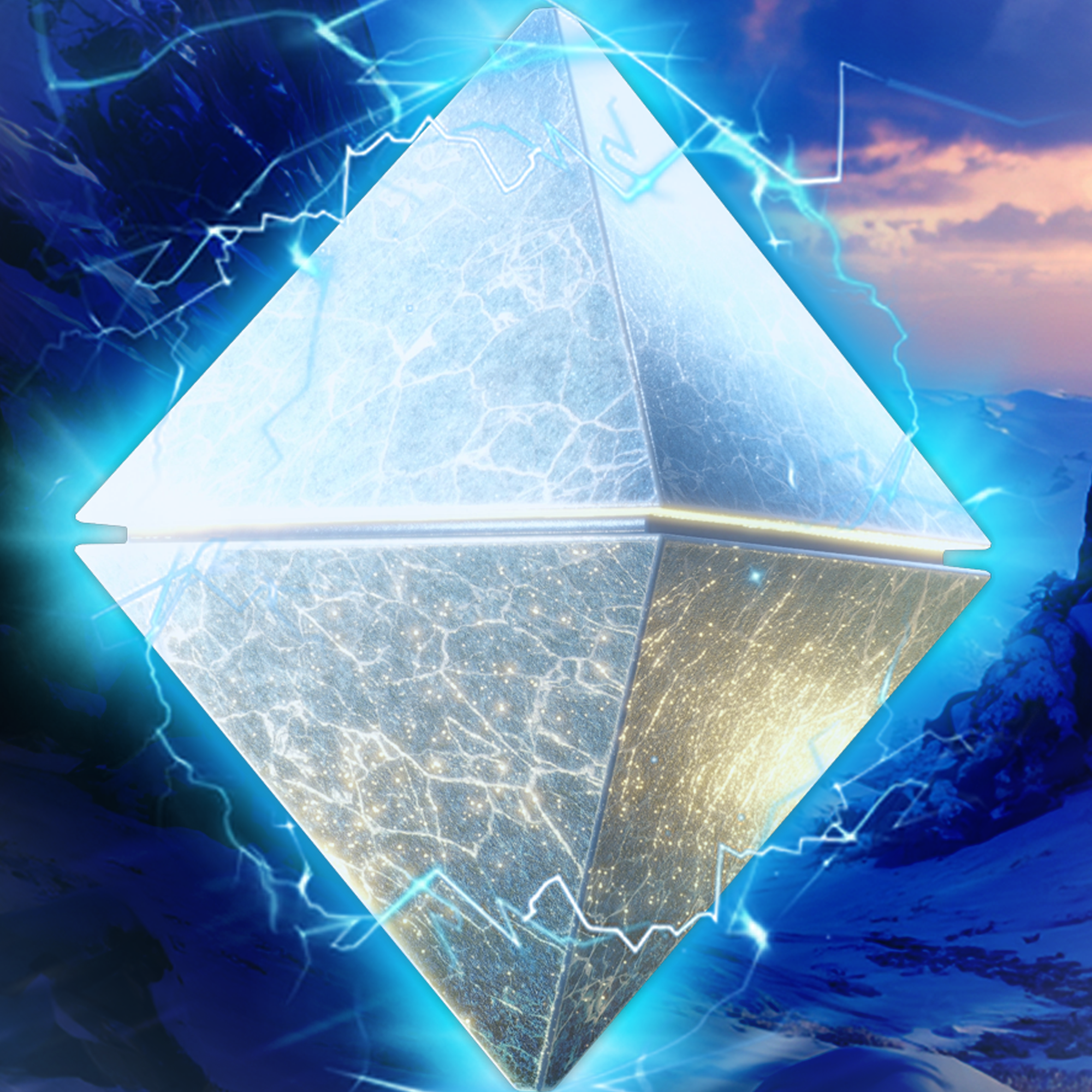
It appeared without warning among the frozen wastes, suspended above the ice and moving with a precision unlike any living creature. It shows no signs of hunger, exhaustion, or pain, and attempts to determine what lies beneath its crystalline surface have yielded little more than damaged weapons and unanswered questions.
Whether the Construct is a machine, a living entity, or something else entirely remains unknown. Even magic appears to behave strangely around it, while the structures it creates seem to follow patterns understood only by the Construct itself.
Those who have fought it describe the same unsettling impression: it does not react as though it is defending itself.
It simply continues whatever it was doing before they arrived.
OVERVIEW
The Prism Construct is an unconventional ranged boss built around geometric attack patterns, area control, and a defensive turret phase.
With few conventional animations, its combat identity instead comes from the behavior of its abilities, using patterned projectiles, unusual firing angles, artillery strikes, and summoned defenses to create the impression of an artificial entity operating according to its own rules.
DESIGN GOALS
- Build a combat identity around an unconventional visual design
Turn the Construct’s abstract appearance into a defining feature by making geometry and structured patterns central to its abilities.
Use abilities to compensate for limited character animation
Give the boss personality and readable behavior through distinctive projectiles, firing positions, movement, and encounter mechanics.
Create varied ranged pressure
Combine patterned projectiles, artillery attacks, and close-range defenses to threaten players differently depending on their position.
Introduce a distinct defensive phase
Temporarily shift the encounter from directly attacking the boss to breaking through its turret formation, creating a change in pacing during the fight
DESIGN PROCESS
The Prism Construct began with an unusual constraint: its visual concept had already been established before I began designing the encounter. Unlike most enemies in the game, it was an abstract geometric entity rather than a recognizable creature, with very limited animation beyond floating, rotating, and moving through the environment. I therefore needed to build a combat identity that could make the unusual visual direction feel intentional.
I decided to embrace geometry as the central theme of its toolkit. Its ranged attacks create geometric patterns with projectiles, while artillery attacks allow it to threaten different areas of the battlefield. For its short-range attack, I deliberately offset the projectile origins so they appeared to fire from the Construct’s angular points rather than from a conventional weapon or central firing position. This allowed the abilities themselves to provide much of the visual personality that the model’s limited animation could not.
I also gave the Construct a defensive phase in which it summons a ring of turrets before retreating into their protection. The turrets use powerful crowd-control effects to defend the Construct, requiring players to break through the formation before they can safely return their attention to the boss. This introduced a clear change in encounter rhythm while reinforcing the idea of the Construct as an artificial entity that relies on structured patterns and external defenses rather than behaving like a conventional creature.
ABILITIES
Damage
Geometric Barrage
The Prism Construct fires multiple projectiles along sharp, angular paths, forming square patterns in front of and behind itself. Players must navigate the resulting shapes as the projectiles travel around the battlefield.
crowd control / Damage
Prism Artillery
The Prism Construct targets areas of the battlefield with delayed artillery strikes, forcing players to move away from the marked locations before the attacks land.
Damage
Angular Blast
The Prism Construct fires a short-range attack from its angular points rather than directly from its center, threatening players attempting to remain close to the boss.
Crowd control
Repulsion Field
The Prism Construct creates an area of energy around itself, disrupting nearby players and knocking them away.
ITERATION
The geometric projectile attacks required significant experimentation to achieve both the intended visual effect and useful battlefield coverage. One early version fired a projectile that traveled forward before making a series of sharp 90-degree turns, eventually completing a square-shaped path and returning toward the Construct. While visually distinctive, the pattern primarily threatened players positioned in front of the boss and left much of the surrounding arena unaffected.
I retained the square motif but redesigned the attack around multiple projectiles, creating geometric patterns both in front of and behind the Construct. This preserved the original visual identity while distributing the threat more effectively around the boss, forcing players to pay attention to the complete attack pattern rather than simply avoiding its forward-facing area.
IMPLEMENTATION & TESTING
Balancing the Prism Construct focused on making the encounter challenging through endurance and positioning rather than extreme damage. Its attacks were designed to keep players moving and reward successfully navigating projectile patterns, but being caught by an individual attack was not intended to immediately decide the fight. This allowed players to make occasional mistakes while keeping sustained pressure throughout the encounter.
Instead, I gave the Construct high durability and designed the fight around gradually wearing it down while avoiding its repeated attacks and crowd control. This also reinforced the character’s unusual identity: the Construct was deliberately difficult to damage, helping create the impression that this unknown entity did not respond to conventional weapons or magic in the same way as the world’s other creatures.
TAKEAWAYS
Constraints can become part of a character’s identity
The Prism Construct’s unconventional appearance and limited animation initially presented challenges, but embracing those limitations led to a toolkit where movement, projectile patterns, and encounter mechanics communicated its identity instead.
Thematic mechanics still need to serve a gameplay purpose
The original square projectile successfully reinforced the geometric theme, but its limited coverage made it less effective as an encounter mechanic. Redesigning the pattern showed the importance of preserving a strong concept while remaining willing to change its execution.
Difficulty does not have to rely on extreme damage
The Construct was designed around sustained pressure, projectile avoidance, and high durability rather than highly lethal attacks. This created a different type of challenge where consistent execution mattered more than surviving individual bursts of damage.
Balance can reinforce characterization
Making the Construct unusually resilient served both the encounter and its narrative identity. Its resistance to conventional attacks helped sell the idea that players were confronting something fundamentally unfamiliar to their world.